A media plan is more than a vague strategy document; it is a working schedule that ties concrete objectives, audiences, timings, channels, and budgets to a measurable campaign executed across a range of media platforms. Understanding the anatomy of a media plan is crucial for marketers looking to make informed decisions about their advertising efforts.
What the Document Is
Before diving into the specifics, it's important to understand the terminology:
- Media strategy: This outlines the overall approach, explaining why specific channels were chosen, how they reach the target audience, what role each channel plays, and the expected reach. 9
- Media plan: This is a broader document that addresses media objectives, the target audience, campaign duration, dayparts or timing, regional emphasis, media scheduling strategy, and media selection criteria. 9, 10
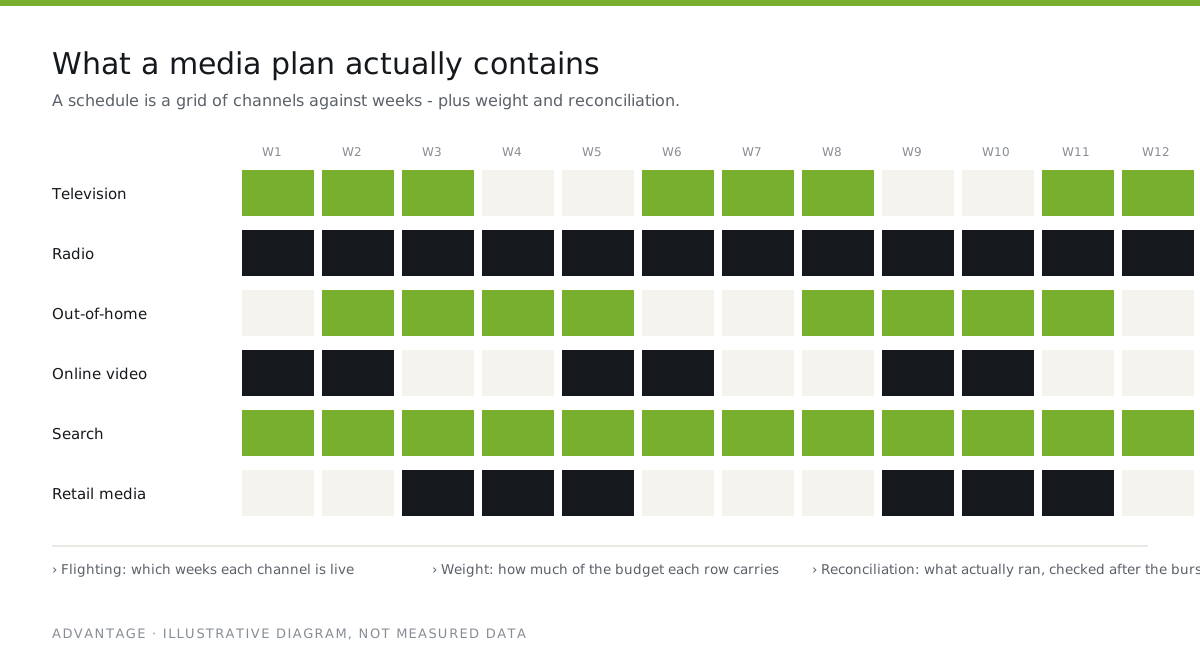
- Media schedule: This is the actual planner with the buy details, delivery, and timing of the campaign. It specifies which channels run when, at what cost, and how the budget is allocated over time. 3, 6
Put simply, a media plan lays out the strategy, and the media schedule is the line-by-line execution.
Media Plan And Buying Controls
The media plan control elements are: 1. media objective 2. target audience 3. campaign duration 4. dayparts 5. regional emphasis 6. scheduling strategy 7. media selection criteria
The media schedule control elements are: 1. channels 2. timing of buys 3. cost detail 4. ad length 5. upfronts or scatter 6. meeting points for deliverables
A media buy is a space (any media item, place or opportunity), and a media placement is a buy happening at a certain time. Every buy you make should have fallback specs, so you don't chase reach percentages and lose the density of quality media and quality impact.
Campaign Duration, Timing, and Scheduling
When reading a media plan, the first sections to look at are the campaign duration, scheduling strategy, and timing details: 1. Duration: How long the campaign runs. This could be 30 days, 90 days, or more. 2. Dayparts: The specific times of day when ads run, such as morning drive time, afternoon, or prime evening hours. Each daypart has a different audience profile. 3. Scheduling strategy: This outlines how the campaign will be paced over time. Common strategies include: - Continuity: Consistently running ads throughout the duration. - Flighting: Running ads in cycles with breaks in between. - Pulsing: A combination of continuity and flighting, with periods of heavier ad density. 10. 4. Media schedule: This is where the actual media placements are mapped out, showing each channel, the specific dates, and the buy timing. 6.
Timing and pacing are critical for building awareness, driving message frequency, and aligning with key events or product launch moments. The quantities of reach delivered are balanced against how wide and deep or light and dense you plan to run each delivery.
Channel Mix, Scope, and Ad Length
The channel mix specifies which media types will be used, such as TV, radio, print, or digital. Each channel is chosen to reach the target audience effectively. The media plan will outline:
- Channels: The specific outlets, such as TV networks, magazines, or websites.
- Scope: Whether the campaign is running nationally, regionally, or locally. This is critical for managing budget and achieving the right exposure.11.
- Ad length: The duration of the ads, which affects cost and impact. TV ads are typically 30 seconds, while digital spots can be shorter. Print ads are priced by size, such as a full-page or half-page. 11.
The media plan will also include the targeting criteria, such as age, gender, or psychographic segments, and the projected reach and frequency for each channel. 4, 7, 11.
Budget and Cost Controls
The budget and cost controls are essential for managing expenses and optimizing ROI:
- Total budget: The overall amount allocated to the campaign.
- Channel budget allocation: How the budget is divided among the different media types. This is often driven by the reach and cost efficiency of each channel.
- Cost per thousand (CPM): The cost to reach 1,000 people. This varies by channel and daypart. The goal is to maximize reach at the lowest CPM. 9, 11.
- Rate negotiation: The process of negotiating the best possible rates with media sellers. This could involve upfront buying, scatter buying, or using the clout of an agency. .
Post-Campaign Reporting and Learning
After the campaign concludes, it's crucial to track performance and report on the results. This involves:
- Setting a reporting cadence: Deciding how often to check in on campaign progress, such as weekly or monthly.
- Documenting key metrics: Tracking reach, frequency, engagement, and any other relevant KPIs.
- Post-campaign reconciliation: Reconciling actual performance against the plan, noting any variances or learning. This is used to optimize the next media plan. .
By establishing a transparent and metrics-driven media planning process, brands can continually refine their approach, maximize ROI, and deliver impactful, data-driven advertising campaigns.
In essence, a media plan is a comprehensive document that ties together campaign objectives, audience targets, scheduling, channels, and budgets into a measurable execution framework. Understanding its anatomy is essential for any marketer looking to optimize their advertising efforts in the ever-evolving media landscape.
 Opinion