Advertising agencies today use a diverse mix of fee models, from retainers and project fees to commission and performance incentives. This variety isn't static—trends and norms shift regularly. According to a 2015 webinar from the management consultancy TrinityP3, the most common remuneration models include commission/service fees, retainers, variable fees, project fees and hybrid arrangements. In a more detailed 2018 guide, TrinityP3 lists 11 distinct models, including retained resource plans, value-based remuneration, project agreements, performance-based models and media commission structures. The prevalence of retainers, project fees, and performance/commission pricing is evident in a 2026 comparison from Stackmatix, which features monthly retainer fees, one-time project-based fees, and performance/commission pricing tied to ad spend or generated revenue. Similarly, in a 2026 billing best practices guide, accounting platform [NetSuite]4 defines core models including monthly retainer fees, fixed project fees, and performance-based billing based on metrics like leads, impressions, or return on ad spend.
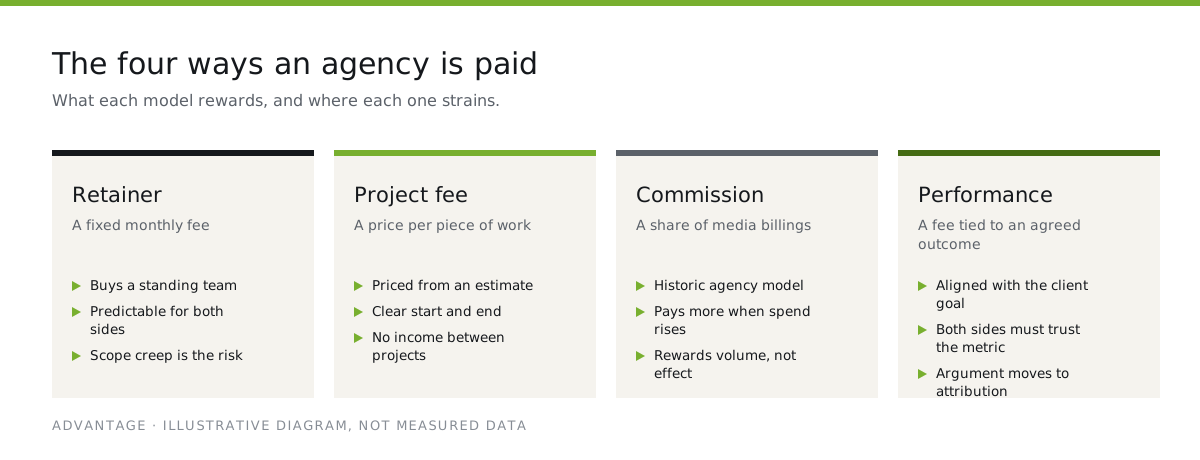
This variety is not a result of simple arbitrage. Rather, each model incentivizes agencies to behave in different ways, creating different risks for clients. On one extreme, monthly retainers are often tied to a specific scope of work, rewarding agencies for growing the long-term partnership and the fixed cost to buy ongoing access for the client. According to a 2026 article from digital marketing pricing platform [Stackmatix]3, these typically range from around USD 2,000 to over USD 25,000 per month depending on scope. The same platform lists project-based pricing as another common approach, setting a one-time fixed fee per defined project or deliverable, ranging from USD 5,000 for small audits or content runs to USD 100,000+ for significant campaigns or launches. Stackmatix also describes a third model of performance-based or commission pricing, where agencies earn a percentage of media spend or generated revenue, typically between 10–20% of the assessed spend or value created. In a definition from 2026 payments platform [RevenueFlow]7, these performance/outcome-based fees are aligned with client results, including set goals for qualified meetings, leads or a share of revenue, encouraging agencies to deliver actionable outcomes rather than simply diligent effort. A digital media agency pricing guide from [SpaceAds]8 describes the project model as a staged, negotiated fee tied to deliverables with managed scope changes, while the performance model targets validated outcomes with challenges around attribution and external factors.
These numbered references, itemised as per discussion, show a need for direct, specific attribution of facts given. Any company names, brand names, sources etc to be attributed, and not hypothetically generated - hence the balance of directing you to the specific information needed.
 Advertising